Media Gallery
EchoVision
Overview
An MR installation using voice-driven visualization to simulate echolocation, promoting empathy for non-human perception.
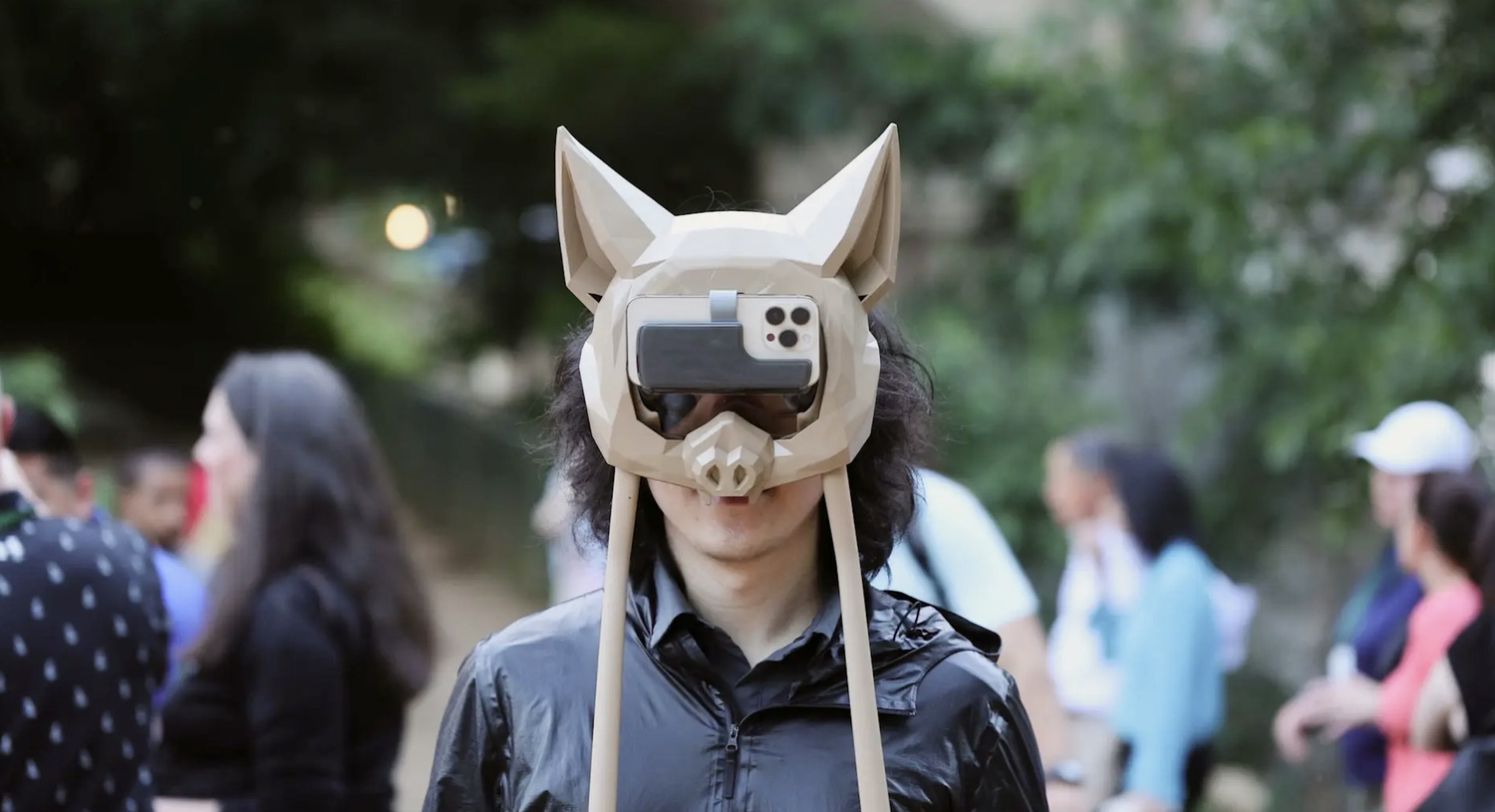
EchoVision is an immersive art installation that allows participants to experience the world of bats using sound visualization and mixed reality technology. With a custom-designed, bat-shaped headset from the open-source HoloKit project, users can simulate echolocation, the natural navigation system bats use in the dark. They do this by using their voices and interpreting the returned echoes with the mixed-reality visualization.
The exhibit adjusts visual feedback based on the pitch and tone of the user's voice, offering a dynamic and interactive depiction of how bats perceive their environment. This installation combines scientific learning with empathetic engagement, encouraging an ecocentric design perspective and understanding between species. EchoVision educates and inspires a deeper appreciation for the unique ways non-human creatures interact with their ecosystems.
The Team
Jianan Johanna Liu
Product Designer
Botao Amber Hu
Director & Interaction Engineer
Jiabao Li
Director & Interaction Designer
Danlin Huang
Product Designer
Xiaobo Aaron Hu
Technical Artist
Yilan Tao
Research Assistant
What Is it Like to Be a Bat?
In "What Is it Like to Be a Bat?" Thomas Nagel explores the unique, subjective experience of consciousness, using bats as a primary example due to their use of echolocation, a sensory perception vastly different from human experiences. He argues that understanding what it is like to be another creature is inherently limited by our inability to fully grasp their subjective experiences. This concept directly relates to EchoVision that allows participants to simulate the echolocation of bats using sound visualization and mixed reality technology. By adjusting visual feedback based on the user's voice, EchoVision bridges the gap between human and bat perception, offering a deeper, empathetic understanding of non-human sensory worlds and emphasizing the profound differences in how various species interact with their environments.
Misconception of Bats
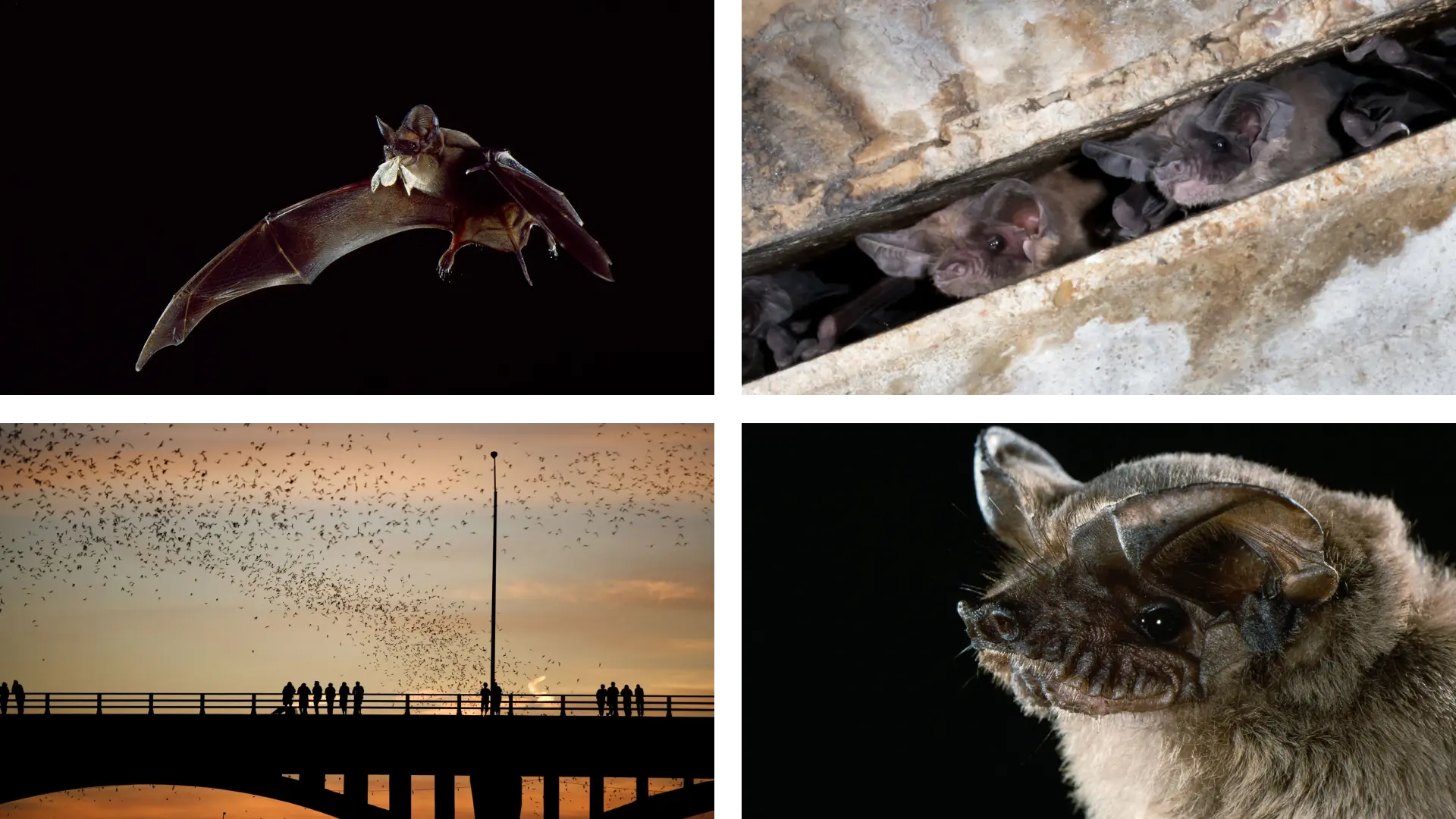
People often harbor misconceptions about bats, viewing them as dangerous, dirty, or associated with negative superstitions. Common myths include the belief that bats are blind, that they commonly get tangled in human hair, or that they are primarily carriers of diseases (especially during the COVID-19 pandemic). These misconceptions contribute to a general fear and misunderstanding of bats, overshadowing their ecological importance and unique biological features.
Bats are ecologically vital, providing essential benefits such as pest control by consuming large quantities of insects, pollination of numerous plants, and seed dispersal that aids in forest regeneration. Their guano enriches soil fertility, contributing to nutrient cycling. These roles help maintain ecosystem balance and biodiversity.
EchoVision aims to challenge and transform these misconceptions by providing participants with an immersive, empathetic experience of the world through a bat's perspective. By simulating echolocation using sound visualization and mixed reality technology, EchoVision allows users to understand how bats navigate and perceive their environment with remarkable precision. This interactive experience highlights the sophistication and elegance of bat echolocation, fostering a greater appreciation for their role in ecosystems, such as pest control and pollination.
Through EchoVision, participants can see bats not as menacing creatures but as fascinating and integral parts of the natural world. The installation encourages scientific learning and empathetic engagement, promoting an ecocentric design perspective that values the diverse ways non-human creatures interact with their surroundings. By offering a new perspective, EchoVision helps dispel myths, reduces unfounded fears, and inspires a deeper connection to and respect for bats and their vital ecological contributions.
Echolocation
Bat echolocation is a sophisticated biological process that allows bats to navigate and hunt in the dark by emitting high-frequency sound waves and listening to the echoes that bounce back from objects in their environment. When a bat emits a sound, it travels through the air and reflects off surfaces, returning to the bat as an echo. By analyzing the time delay and changes in the frequency of the returning echoes, bats can determine the distance, size, shape, and texture of objects, as well as the speed and direction of moving prey.
The Contemporary Austin - Host: Fusebox Program
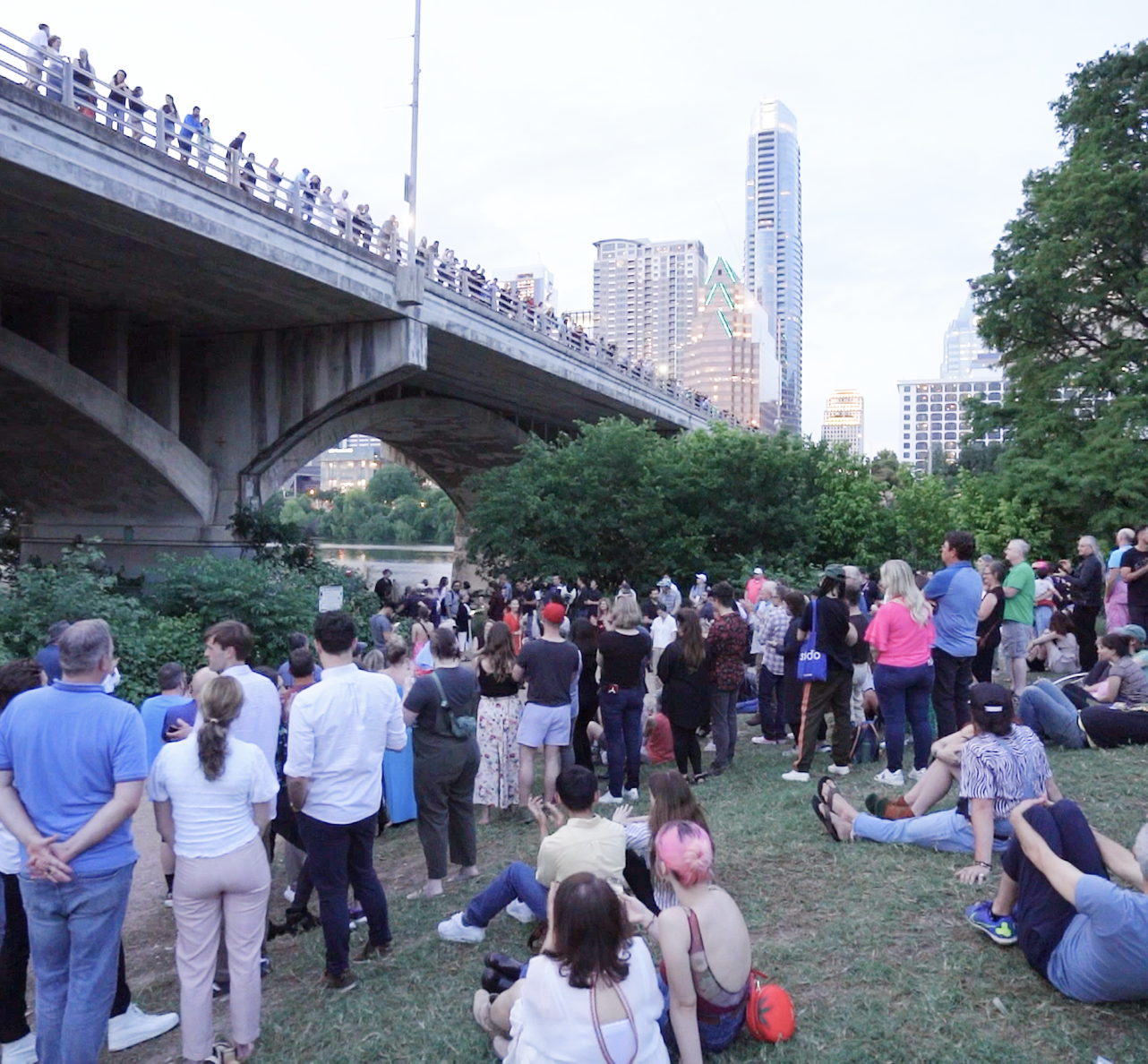
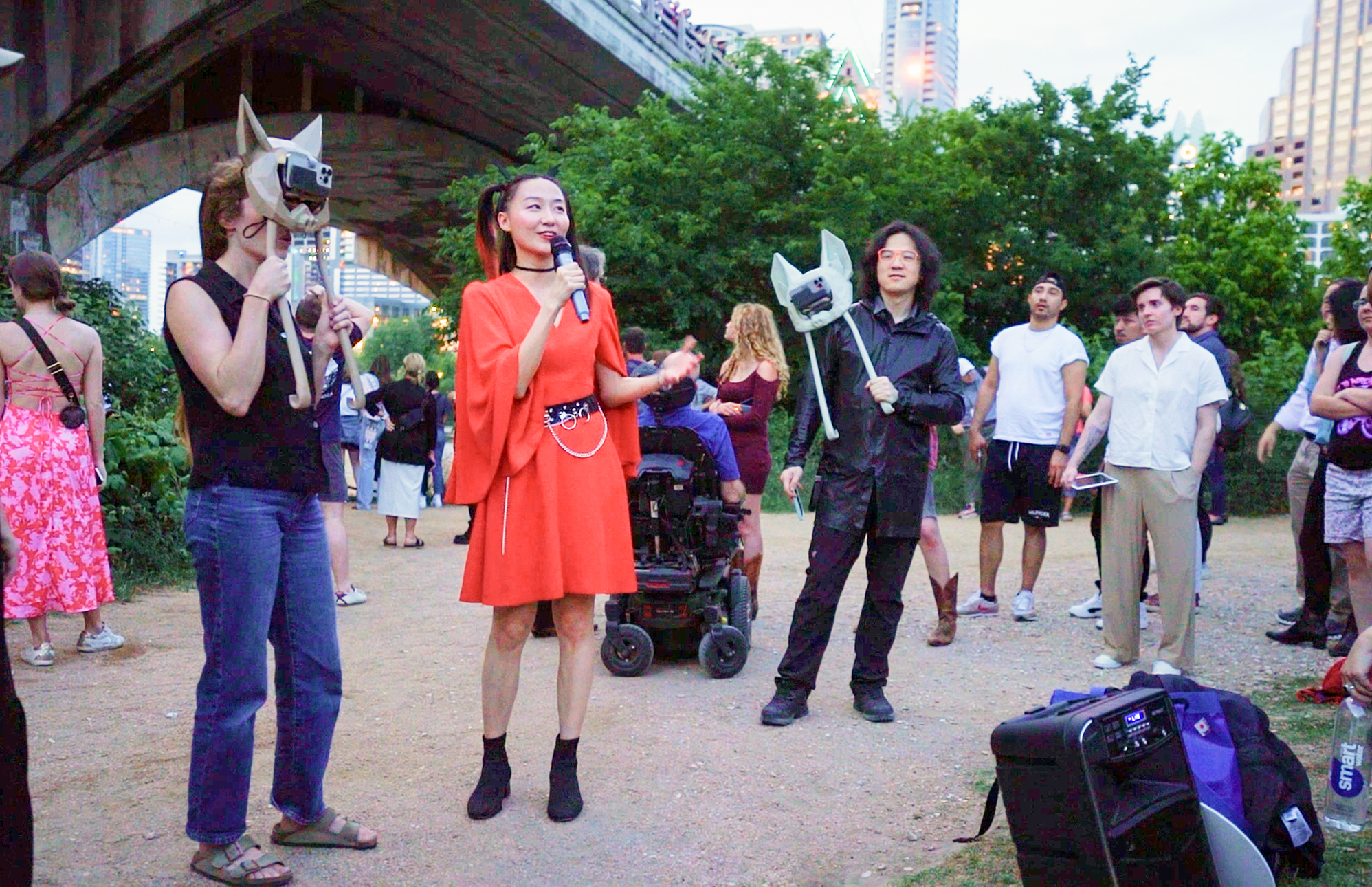
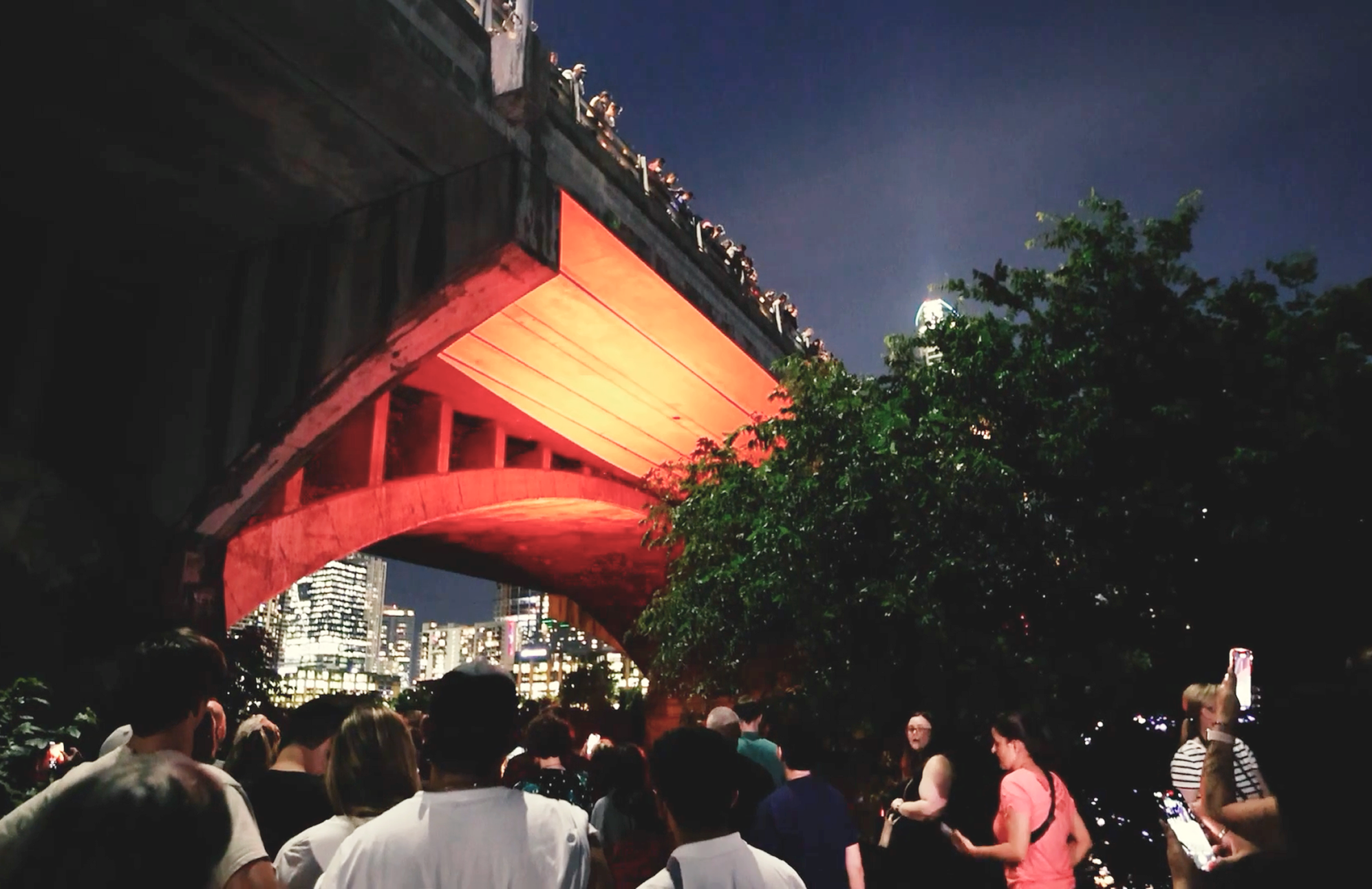
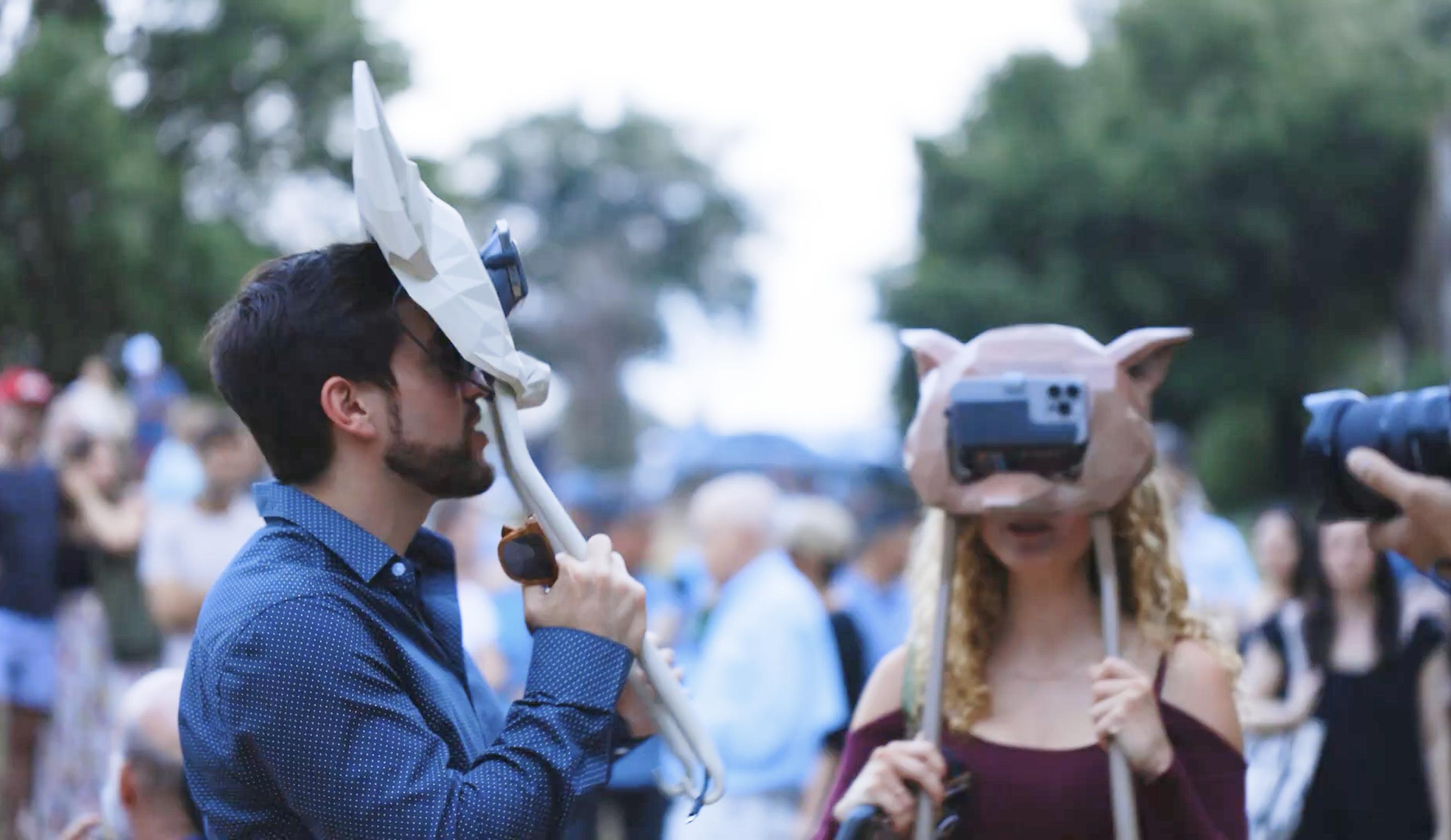
We premiered EchoVision at The Contemporary Austin as part of the Fusebox Festival. The Congress Avenue Bridge in Austin, Texas, famously hosts the largest urban bat colony in the world, with roughly 1.5 million Mexican free-tailed bats residing beneath it every summer. Our performance started under the bat bridge with our collaborator, the bat conservationist Merlin Tuttle, who saved the 1.5 million bats under the Austin Bridge from extermination. About 500 people came. They listened to Merlin’s captivating stories with bats, watched the huge number of bats flying out of the bat bridge after sunset, and experienced EchoVision to be like a bat and to have a rare glimpse into the bat's perceptual universe.
Then, the adventure progressed with a walk straight down Congress Avenue to The Contemporary Austin Museum, where Jiabao Li and Matt McCorkle performed a live bat-inspired soundscape event called "Nocturnal Fugue." Nocturnal Fugue uses bat vocalizations—from social calls to mating rituals—to artistically create a mesmerizing sonic experience. This soundscape is combined with visual projections that represent the environment in which the specific bat call is being made or in response to. At the rooftop, we served Tequila. Bats are agave pollinators. They are part of the key process that turns agave flowers into tequila.
Mask Design
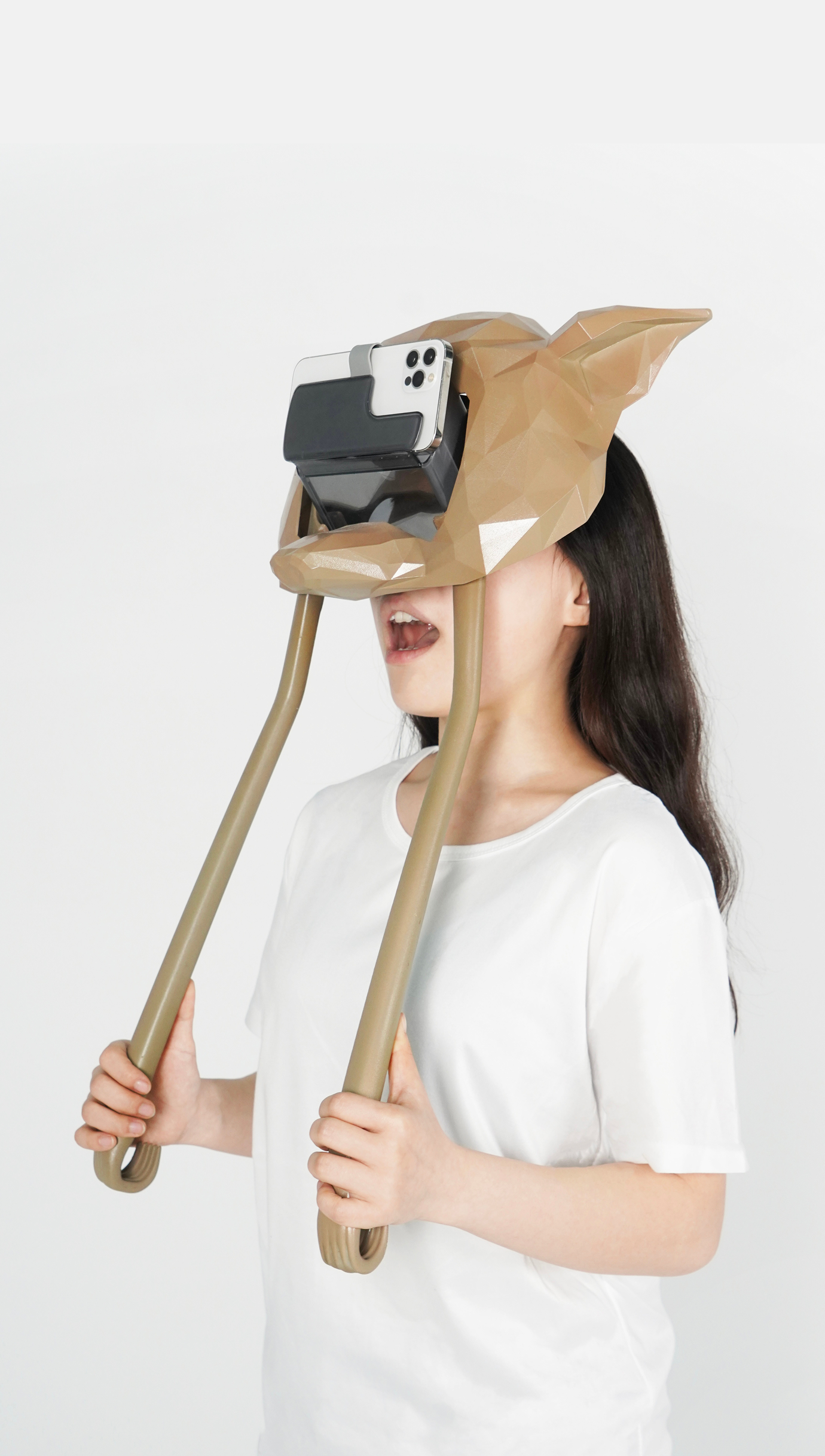
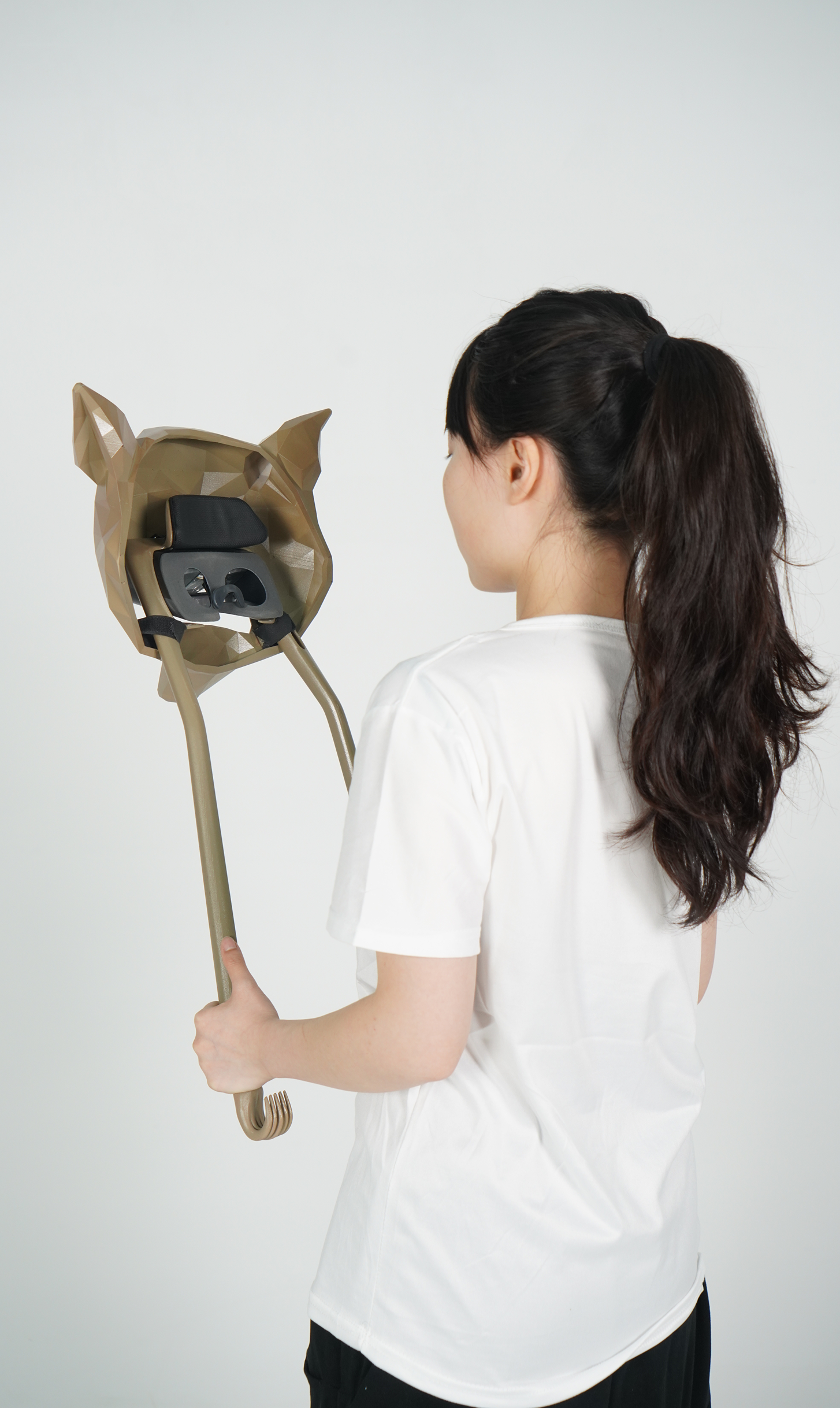
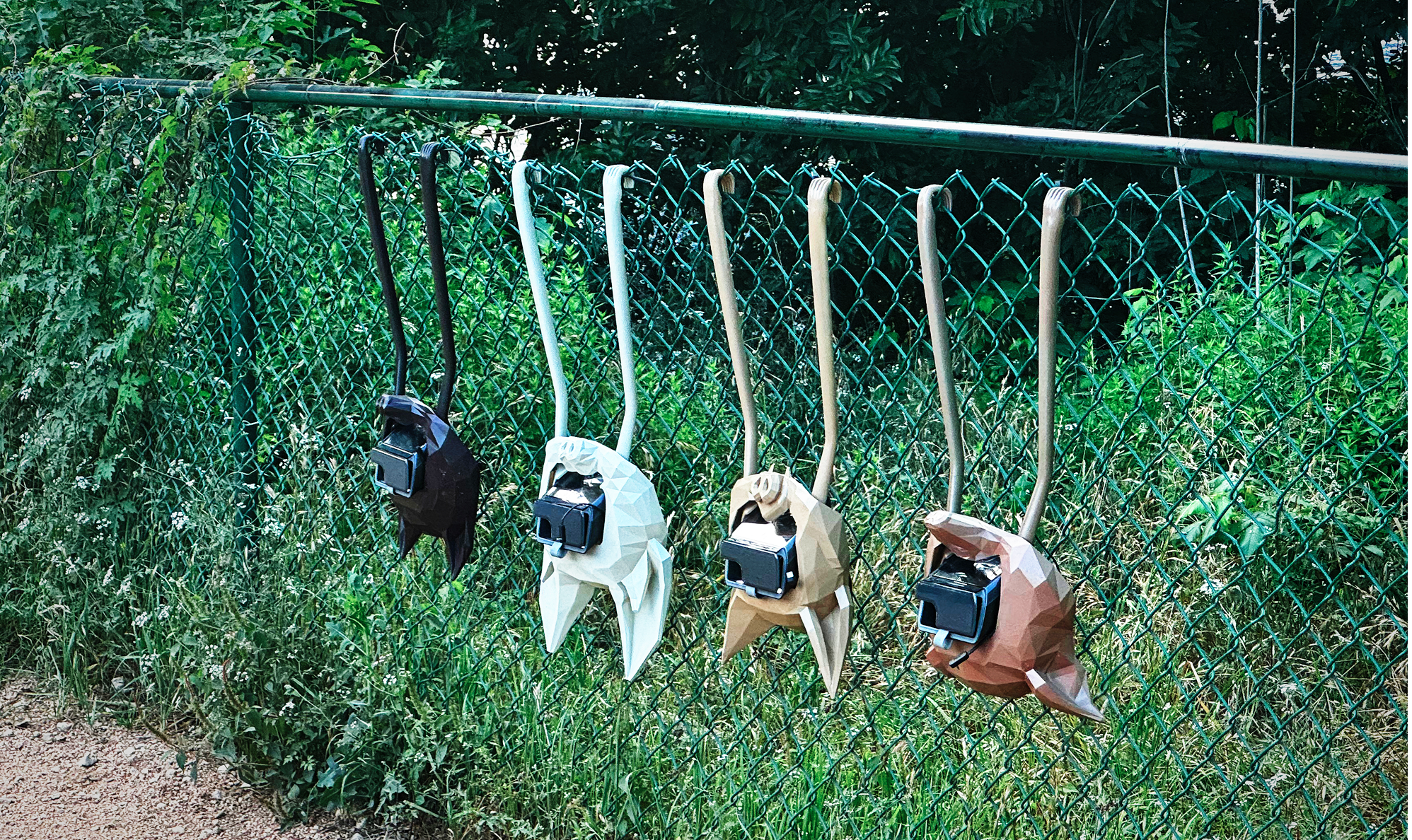
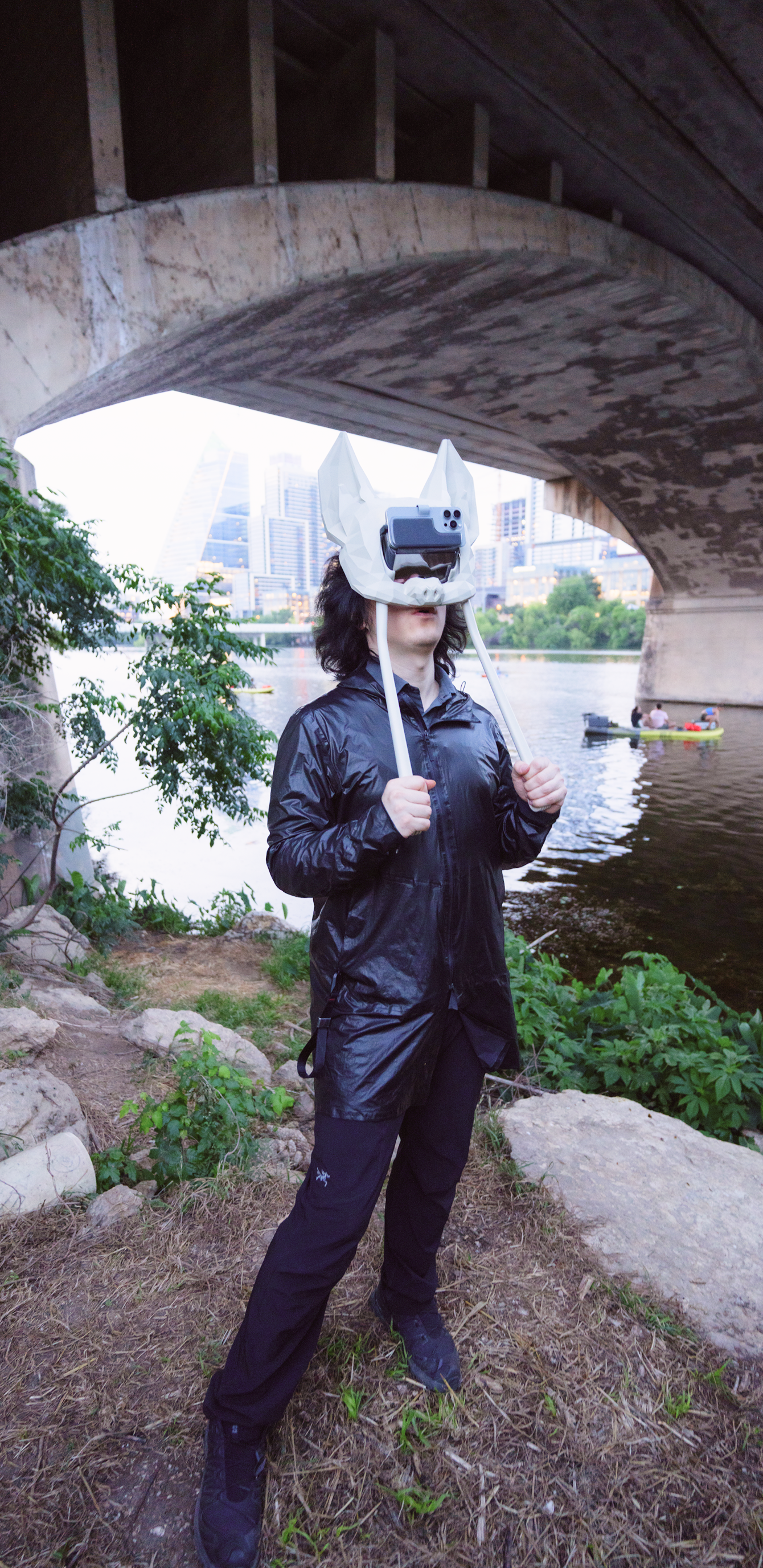
The bat-shaped mask encases the HoloKit, an smartphone-based open-source optical see-through stereoscopic mixed reality headset [Hu et al. 2024]. It attaches to the HoloKit’s headpad via Velcro, with the original headband removed. The iPhone is mounted in the HoloKit, and the mask design carefully avoids obstructing the iPhone’s camera and LiDAR sensor. This enables 3D environment sensing while keeping the headset’s optical see-through area unobstructed for audience viewing.
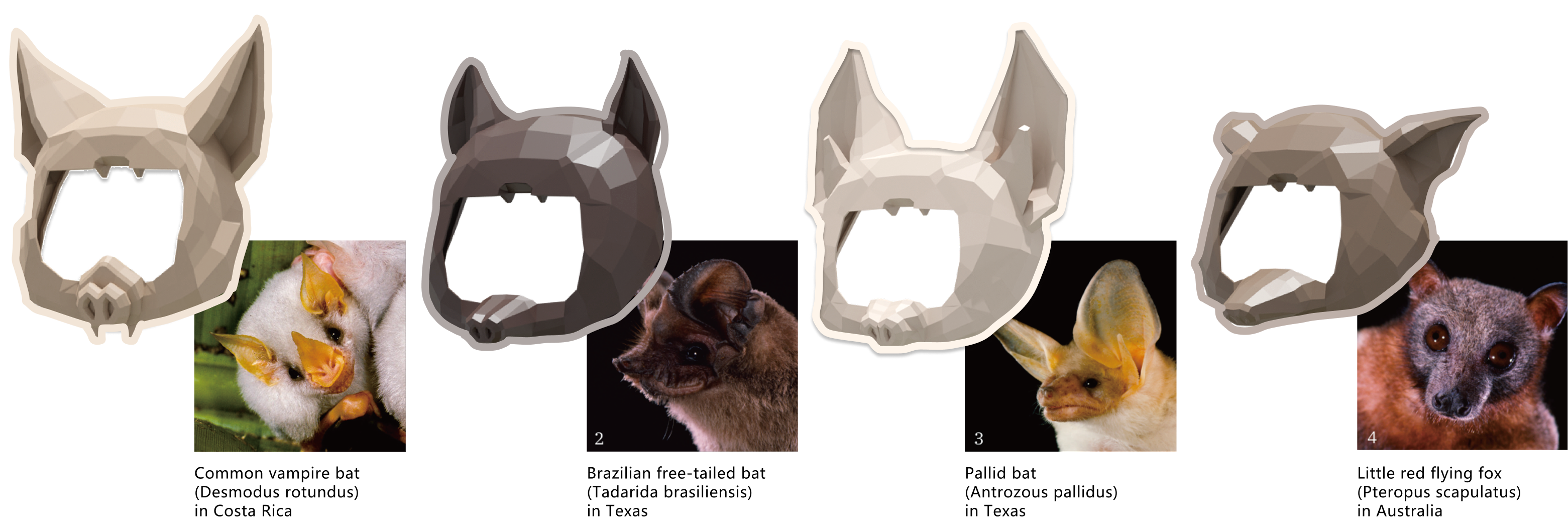
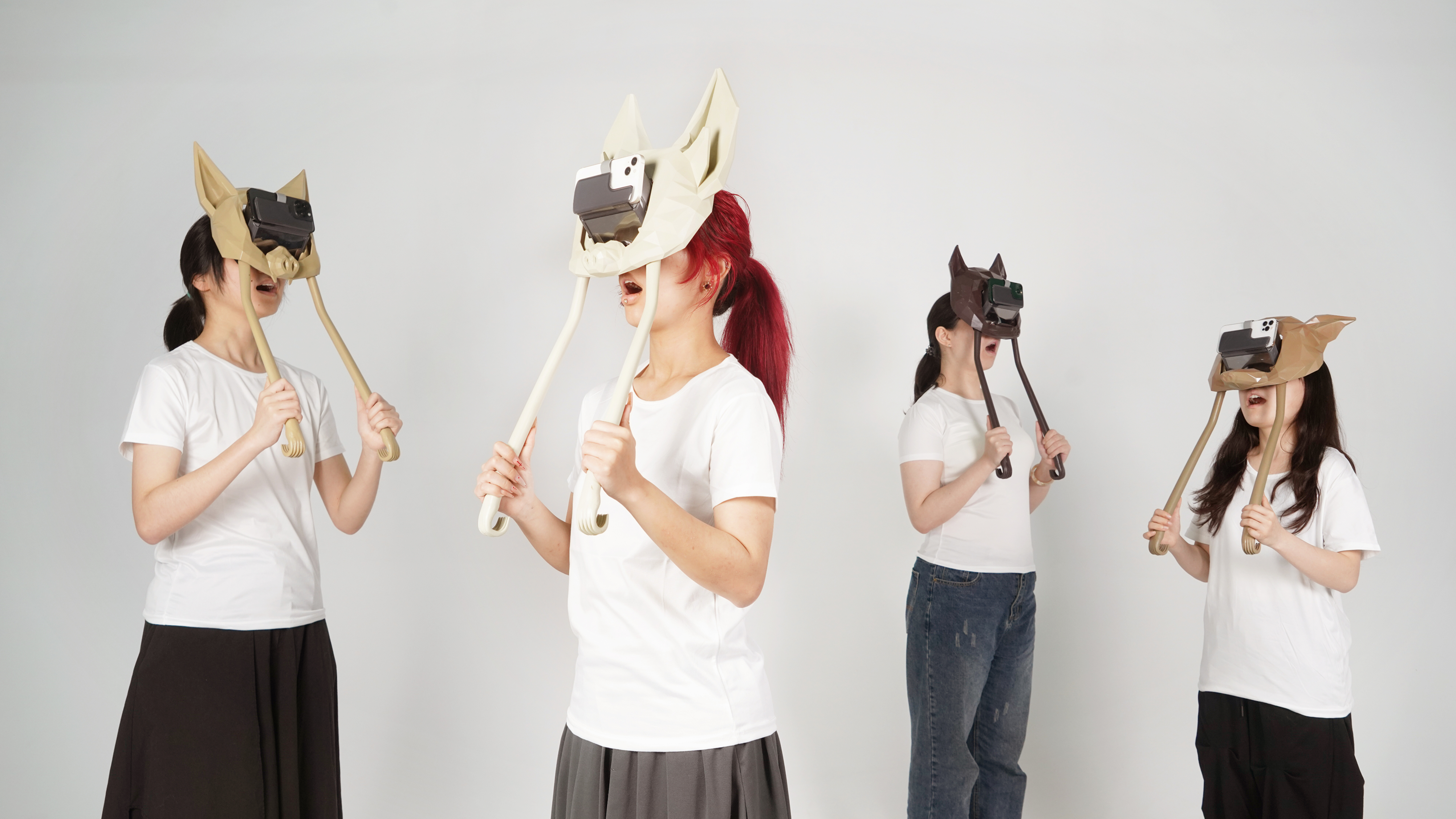
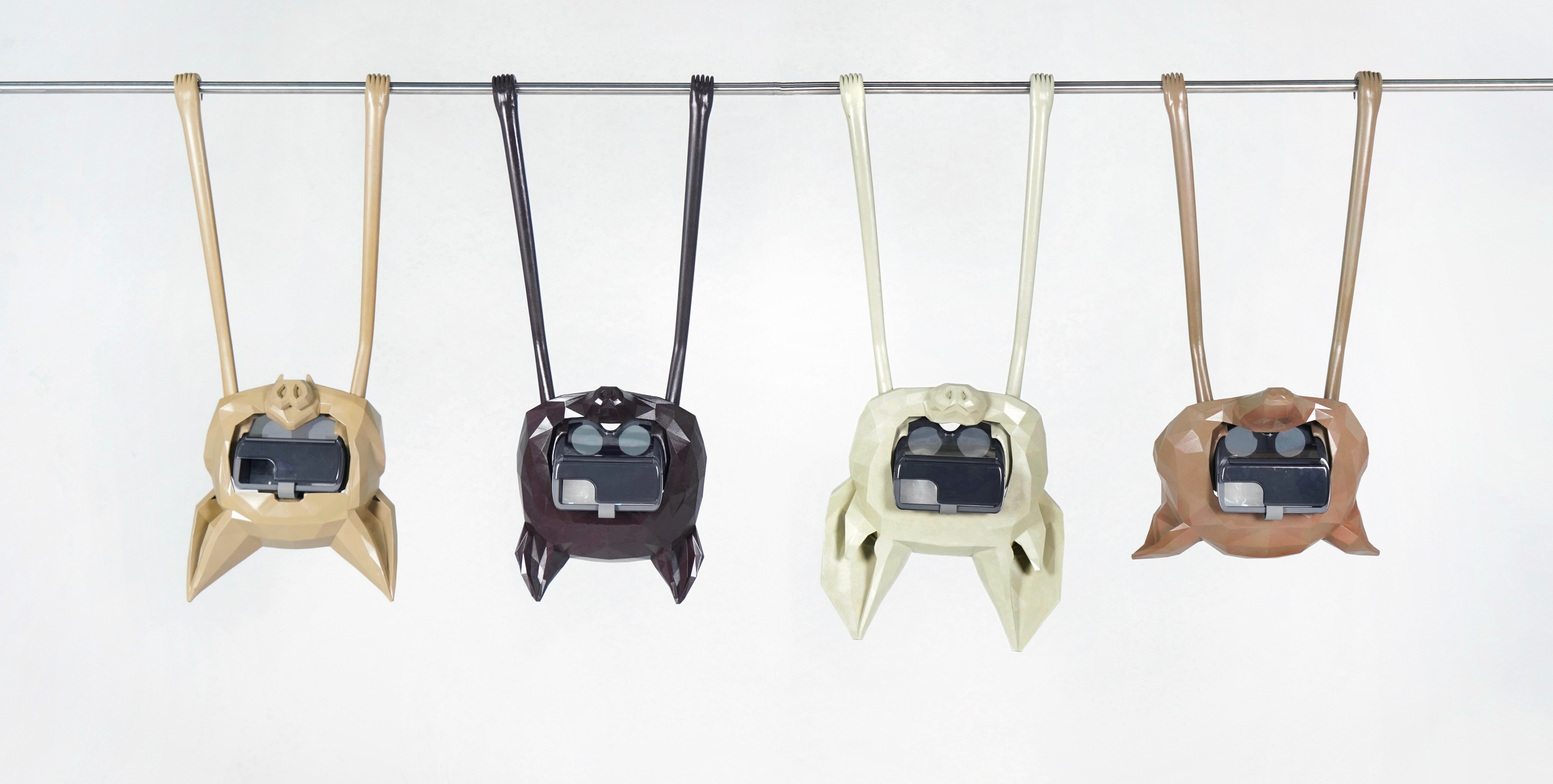
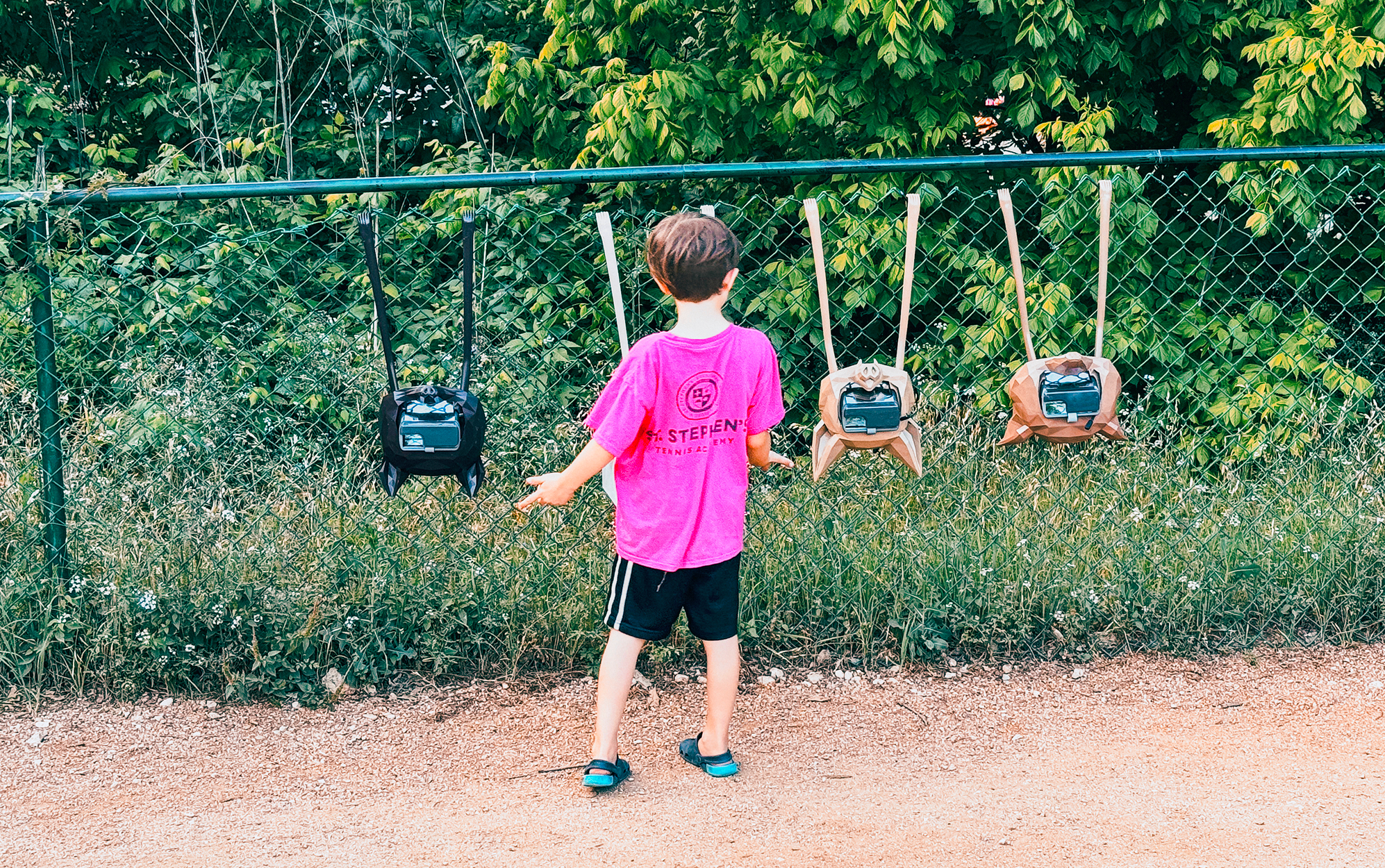
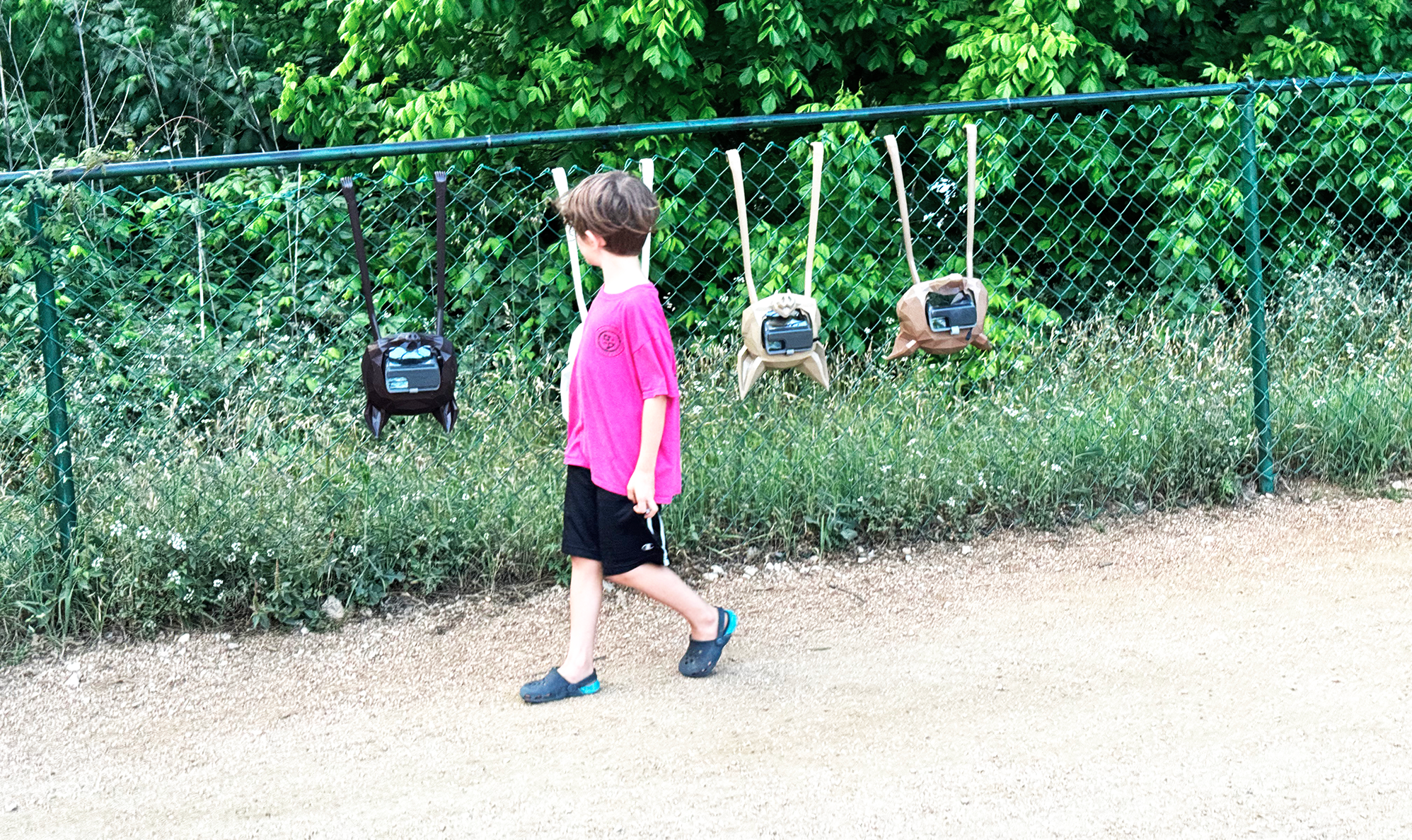
Our mask design draws inspiration from four distinct bat species, including two native to Austin—the Pallid bat and the Brazilian free-tailed bat (Figure 3). We employed a low-poly aesthetic to simplify the bats’ intricate forms while accentuating their key features. The color palettes were meticulously chosen to reflect the natural fur colors of these bat species. Each mask was crafted using Rhino for 3D modeling, followed by resin 3D printing and detailed hand-painting. The mask uniquely features claw-like handheld handles designed to mimic bat legs. This design allows it to hang upside down from poles, ropes, or branches, replicating the natural resting posture of bats.
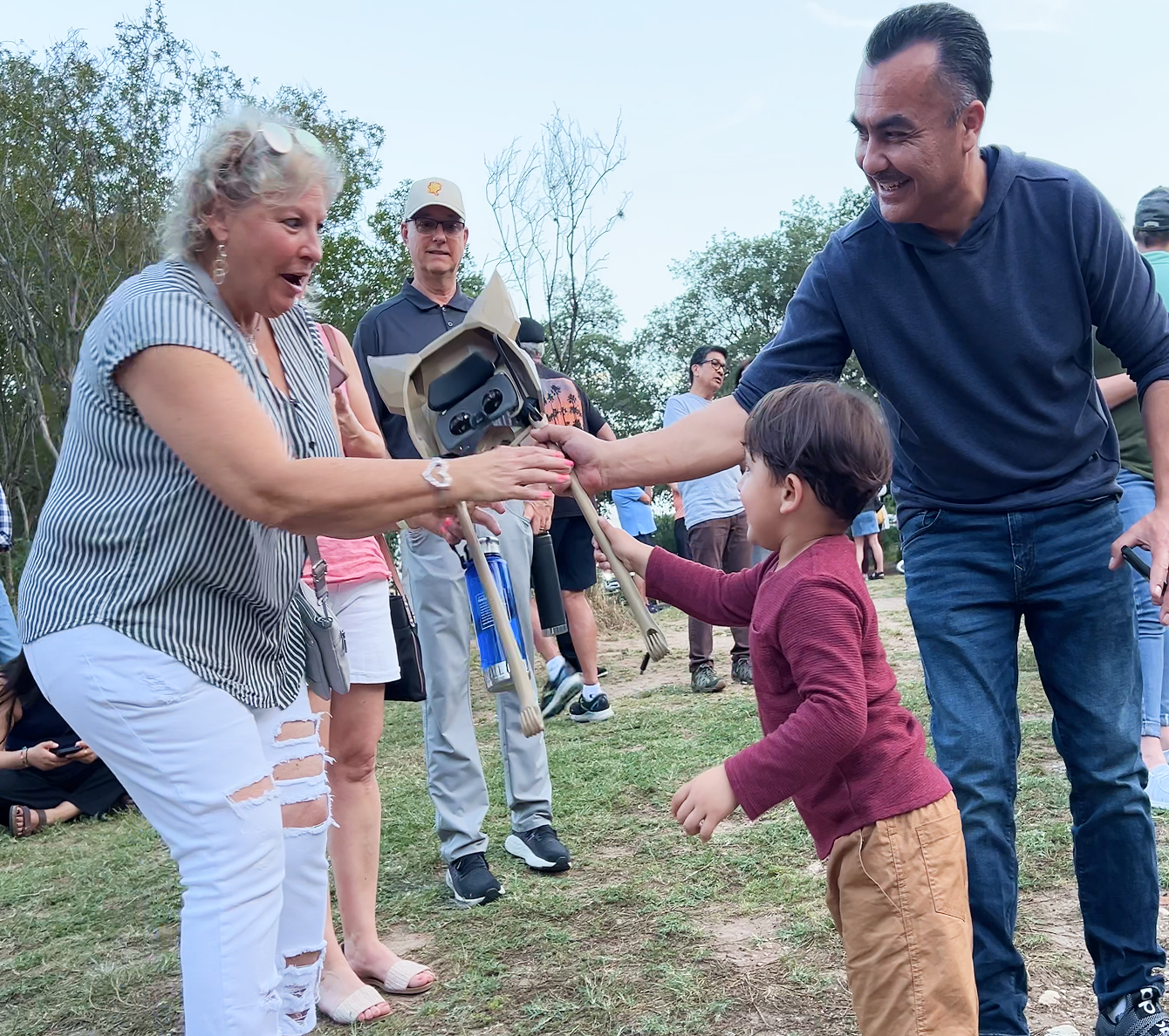
The handles provide an ergonomic way for users to hold the entire mask, preventing discomfort from headset weight and enabling easy passing to the next user. These detachable handles not only facilitate easy storage and replacement but also offer intuitive affordances for audience interaction and manipulation.



XR Effect Display
LiDAR sensors and bat echolocation share fundamental similarities in detecting and mapping surroundings through signal reflection. LiDAR produces high-resolution 3D models, while bats form mental maps for navigation and hunting in darkness. Both methods offer high accuracy in object detection and positioning. EchoVision leverages this similarity, visualizing sound waves to mimic bat echolocation.
It illustrates sound propagation in a LiDAR-reconstructed environment, artistically simulating echolocation and bridging human technology with natural processes. The visual effects are influenced by the voice volume of the user’s real-time voice input, the pitch of the voice, and the 3D contour of the surrounding environment:
Sound Propagation and Brightness. Visualized sound waves propagate forward, with louder voices creating wider angles and brighter lines. This encourages users to experiment with volume levels.
Pitch and Wave Thickness. Higher pitches are represented by finer, farther-traveling lines, demonstrating how pitch amplifies sound reach. Users are motivated to try different pitch levels.
Particle Effects. Particles burst upon wave collision with surfaces, providing visual cues of sound reflection in the environment.
Human Body Recognition. Golden-colored waves and additional particles appear when sound waves interact with human bodies. This feature highlights human body forms and encourages users to vocalize towards nearby individuals, enhancing social interactivity and creating engaging social dynamics.
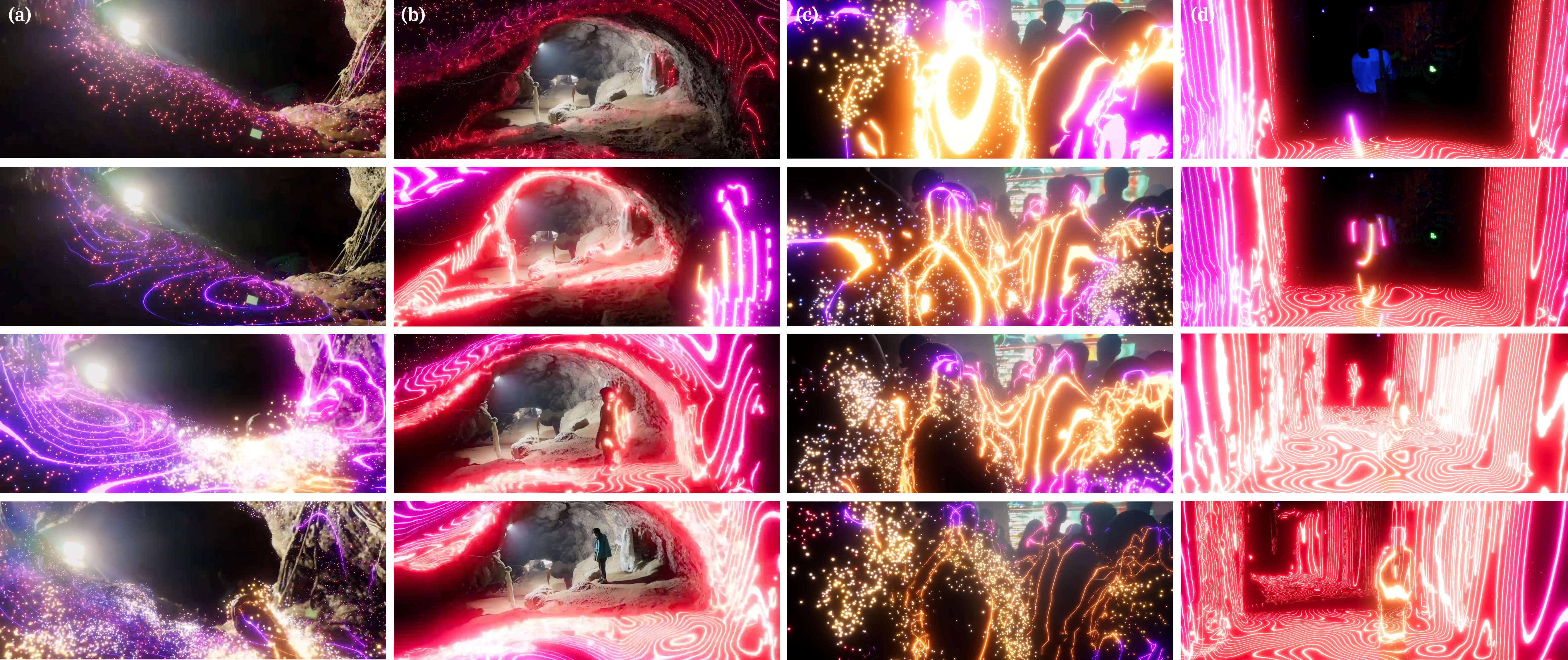
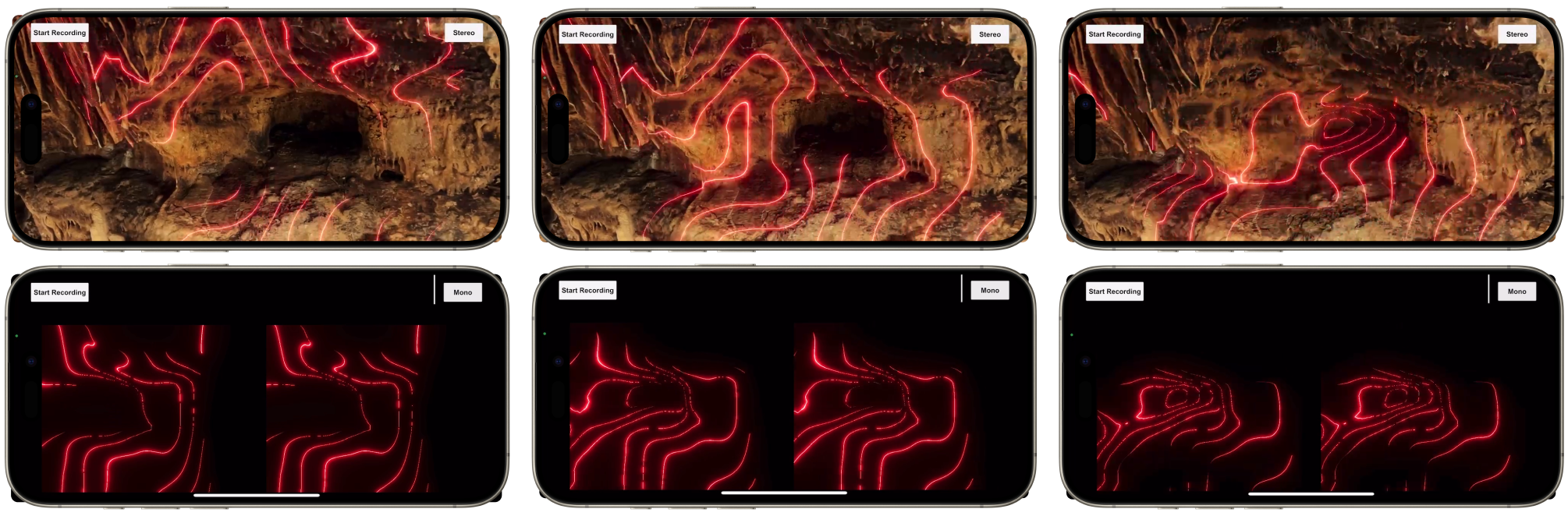
Mixed reality first-person views of EchoVision visualizations: (a) and (b) Echolocation effects in actual bat-inhabited caves; (c) Sound wave interactions within a crowd; (d) Sound propagation along a corridor with passersby.
Outdoor Event Site
EchoVision premiered at the Congress Avenue Bridge in Austin, Texas—home to the world’s largest urban bat colony, comprising approximately 1.5 million Brazilian free-tailed bats. Our pop-up exhibition, which drew over 200 participants, unfolded beneath this remarkable "bat bridge" in collaboration with renowned bat conservationist Merlin Tuttle, celebrated for his pivotal role in preserving Austin’s bridge-dwelling bat population.
The event progressed through three engaging phases:
This multifaceted event seamlessly merged ecological education, natural wonder, sensory experience, and cutting-edge technology. The social, interactive nature of the pop-up exhibition offered participants an immersive introduction to bats’ perceptual umwelt, bridging ecological knowledge with embodied experience and fostering a collective eco-phenomenological understanding of bat ecology.
The event progressed through three engaging phases:
- Participants gathered to hear Merlin Tuttle’s captivating narratives about bats and conservation efforts.
- Participants experienced EchoVision firsthand, allowing them to glimpse the world through a bat’s unique sensory perspective. The handheld devices were passed from person to person, creating a self-propagating experience.
- As dusk descended, participants witnessed the awe-inspiring spectacle of countless bats emerging from their daytime roost to hunt insects beneath the bridge.
This multifaceted event seamlessly merged ecological education, natural wonder, sensory experience, and cutting-edge technology. The social, interactive nature of the pop-up exhibition offered participants an immersive introduction to bats’ perceptual umwelt, bridging ecological knowledge with embodied experience and fostering a collective eco-phenomenological understanding of bat ecology.
Exhibitions
- SIGGRAPH Asia. 2024. XR. "EchoVision". Tokyo, Japan
- West Bund Art Festival. 2024. "EchoVision". Shanghai, China.
- TANK Art Festival. 2024. "EchoVision". Shanghai, China.
- International Symposium on Wearable Computers (Ubicomp-ISWC), Design Exhibition. 2024. "EchoVision". Melbourne, Australia.
- Vancouver International Film Festival. 2024. "Nocturnal Fugue". Vancouver, Canada.
- Ars Electronica. 2024. "Nocturnal Fugue - Becoming Bat with EchoVision". Linz, Austria.
- Sheffield DocFest. 2024. "Nocturnal Fugue". Sheffield, UK.
- Omotesando interactivité. 2024. "Nocturnal Fugue". Tokyo, Japan.
- Host: Fusebox Program, The Contemporary Austin. "Nocturnal Fugue". Austin, US.